Wednesday, 21 March 2012

Old and Bold

Old and Bold!

This old fella has been sitting on my easel for a
while now, he keeps looking at me, wondering when I’ll finish his
painting! In truth, I enjoyed painting it
so much, I have been adding little bits each day, watching the face appear out
of a fairly pale wash.

I could see warm colours in this painting although I have
used cool colours in the shadow areas and warmer colours where the sun is catching
the trunk and ears.

My old and bold friend is here for you to see, hope
you like him!

Tuesday, 20 March 2012

Sharp Edge

Sharp Edge
"Blencathra",
Lake District


Anyone who knows our family well will wonder why, with
a smile, that I don’t paint more of the Lake District. I wonder why too, perhaps it is that I’ve
fallen in love with the Somerset Levels which couldn’t be further from the
heights of the fells!

There is more to this painting that meets the
eye. Dark versus light, colour versus
monochrome, sharp versus fuzzy. I wonder
how much we actually take in when we glance at a landscape view?

www.kayeparmenter.co.uk

Boo!

Boo!

There can be tricks and tips that may help to make a
painting “work”. In many paintings, I sometimes
use tonal counterchange which is a placement of dark tones adjacent to very
light tones and vice versa. This useful
technique can help to form shapes, and is sometimes useful in defining the
focal point of the painting.

A jaunty head angle with this hare, was deliberately
placed to suit the shape of the painting.

www.kayeparmenter.co.uk

Sunday, 18 March 2012

Dancing Light


There are so very many factors to consider about
planning a painting before picking up your paint-brush. For me, the beauty of watercolour is that,
however hard I plan there will always be little surprises around the corner.

This painting has an unusual composition and narrow
format with the left hand side of the ballerina creating a wavy line down the
page. What I wasn’t expecting was the
way the water flowed back into the deeper colours, creating wonderful watermarks
and glowing highlights across the shoulders, tutu and back of leg.

I have named this painting, “Dancing Light” because of
this.


Thursday, 15 March 2012

Old Faithful!

Old Faithful!

When you are pushing yourself to experiment to achieve something a little different in your paintings, I think it is sometimes comforting to return to a subject that you are familiar with, such as “Old Faithful”.

In doing this, you may not feel that you are pushing the boundaries but I believe that, following your experiments, it is unlikely that you’ll paint your familiar subject in exactly the same way, with the same colours. It is because of this that I believe this is a good exercise to try. Compare the paintings!

Tuesday, 28 February 2012

Big Cat, Little Cat!


I've named this painting - "That's Mine!" due to the intense expression on this cat's face.

Watercolour can be so exciting, particularly when you take chances and try to work with the paint, rather than trying to control it. I love that it has a will of its own - paint with attitude!

This was an exciting and spontaneous piece to paint and I made bold decisions! Colours were dropped onto the paper that I'd wetted, followed by the addition of thick strokes of deep rich paint. I watched the watercolour paint on the paper work its magic and, it was only when it was starting to dry, that I lifted very small sections where needed with a dry brush.

Simply Magic!!!

www.kayeparmenter.co.uk

Wednesday, 22 February 2012

A brush on the Wild Side!

A brush on the wild side!
My wild lion was painted using some wild colours in a wild moment! I have to confess to being sometimes too happy with my palette of colours - the ones that have become my friends as I know and understand them so well. But how liberating it can feel to bring some new colours into the equation! And in this case, these were colours that I wouldn't expect to see on a lions head....but, for me, somehow it works.
Stepping out of your comfort zone is not always easy, yet can be so exciting!

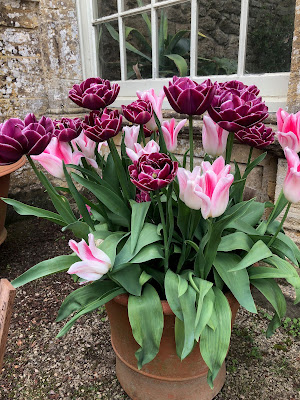
Tulip Time - National Trust